Unified technical document
DTU
for tensioned fabrics and push-fit piping
Installing a tensioned fabric on a frame or lightbox means following a number of technical recommendations. The choice of piping, the temperature, the quality of the fabric, the fixing and the ventilation all have a direct impact on the tension, safety and durability of the installation.
Which piping should you choose for a tensioned fabric?
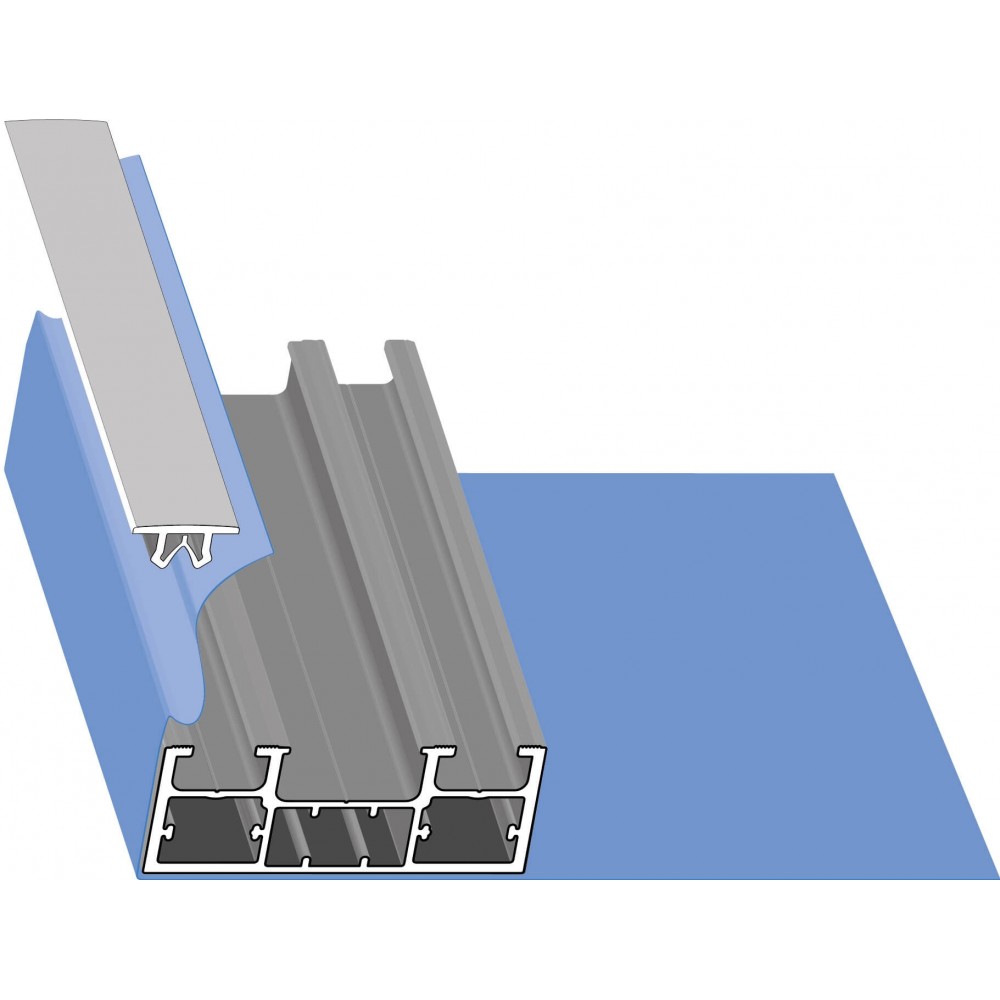
Isermatic offers three main types of push-fit piping, depending on the use and the type of fabric.
| Piping type | Recommended use |
| JR reinforced piping | Indoor and outdoor, especially for demanding applications |
| JN standard piping | Indoor, for fabrics up to 600 g/m² |
| JF fine piping | Indoor, for thin textiles such as Tyvek, satin or silk |
The PVC piping described in the Isermatic document is 100% recyclable, has a Vicat softening point of up to 80 °C and an M1 fire rating, equivalent to B-s2,d0.
To find the matching solutions, see the Isermatic fabric tensioning systems
What precautions should you take depending on the temperature?
Weather conditions change how the piping and the fabric behave.
Below 10 °C, piping can become brittle and the fabric stiffer. We recommend keeping them somewhere warm before installation.
In very hot weather, piping softens and the fabric becomes more elastic. It is best to keep the materials somewhere cool until they are installed.
In all cases, a hold test should be carried out before the fabric is fully tensioned.
How long should you wait after printing?
For a printed fabric, Isermatic recommends waiting 48 hours between printing and installation so it can off-gas and stabilise.
What performance should you check for a tensioned fabric?
Before installation, we advise checking the fabric’s technical specifications, in particular:
- tensile strength
- tear strength
- fire rating
- weight per m²
- compatibility with the profile and piping.
The document gives minimum values of 250/220 daN per 5 cm for warp and weft tensile strength, and 25/25 daN for tear strength.
What rules apply to a frame or lightbox?
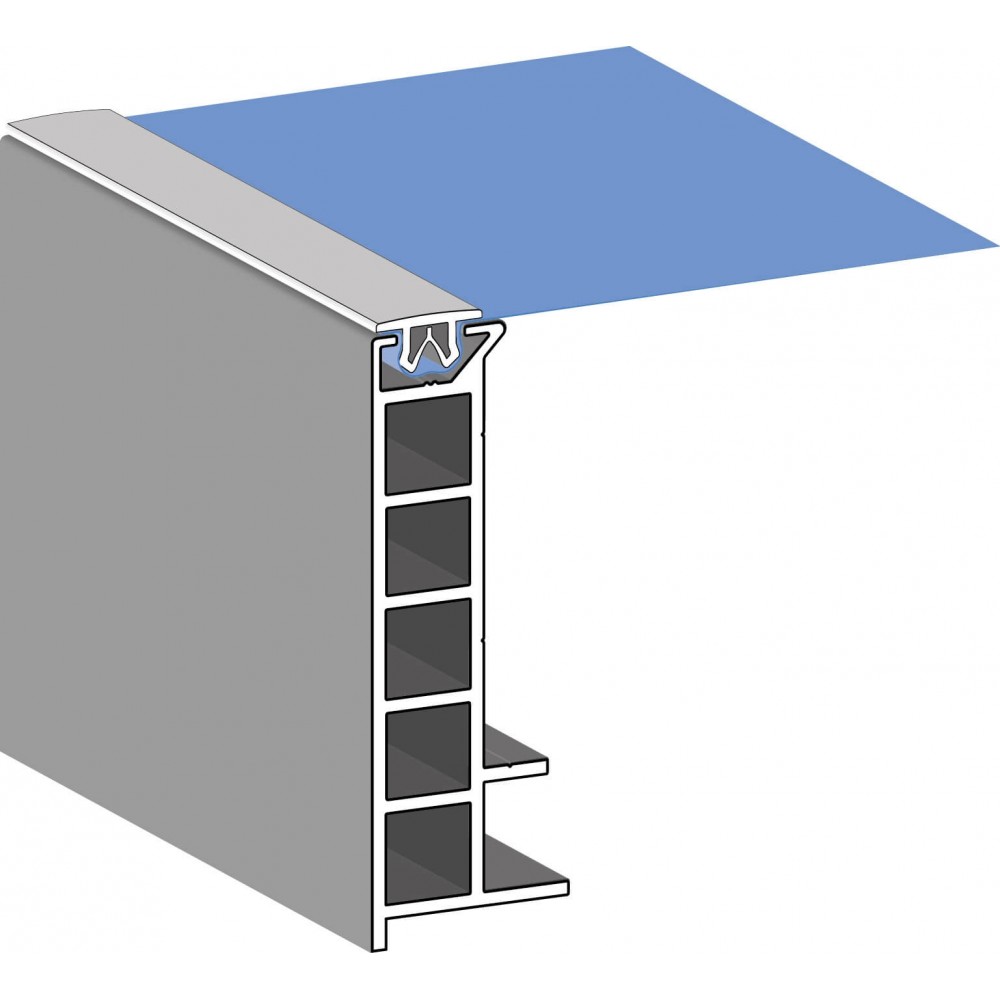
Frames and lightboxes can be built in several modules to make transport and installation easier.
In particular, the Isermatic document recommends:
- frame sections no larger than about 3.50 m by 2.20 m;
- a guideline maximum weight of 30 kg per section;
- a surface area limited to about 6 m² per module;
- fixings suited to the existing structure;
- an even bearing surface under the profiles.
For illuminated structures, discover our tensioned fabric lightbox solutions.
How should you handle electricity, condensation and ventilation?
Each section of a lightbox must be able to connect to a 220 V power supply. Electrical sizing must be carried out by a qualified professional.
To help condensation drain away, the document recommends drilling 8 mm holes in the bottom profiles.
Good ventilation is also essential, especially for dark visuals exposed to the sun. It can take the form of:
- openings at the bottom and top;
- spacers that let air circulate;
- a micro-perforated fabric;
- an air extractor when natural ventilation is not enough.
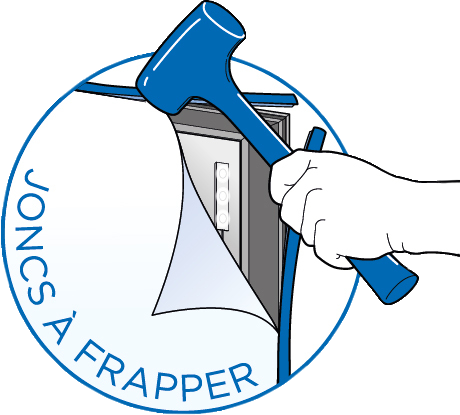
Which tools should you use to install push-fit piping?
Installation must be done with the right equipment:
- a cutter blade;
- piping pliers;
- a dead-blow mallet.
Using a standard mallet or a club hammer is not recommended, as it increases the risk of breaking the piping.
FAQ
Which piping should be used outdoors?
JR reinforced piping is the model recommended for indoor and outdoor installations.
Can fabric be installed in cold weather?
Yes, but below 10 °C the piping can become brittle. We recommend keeping the fabric and piping somewhere warm before installation.
How long should you wait after printing?
An off-gassing time of 48 hours is recommended.
How do you stop a fabric from unclipping in the sun?
Provide enough ventilation and prevent heat from building up behind the fabric.
Which tool should be used to insert the piping?
Use a dead-blow mallet to reduce the risk of breakage.
Need technical support?
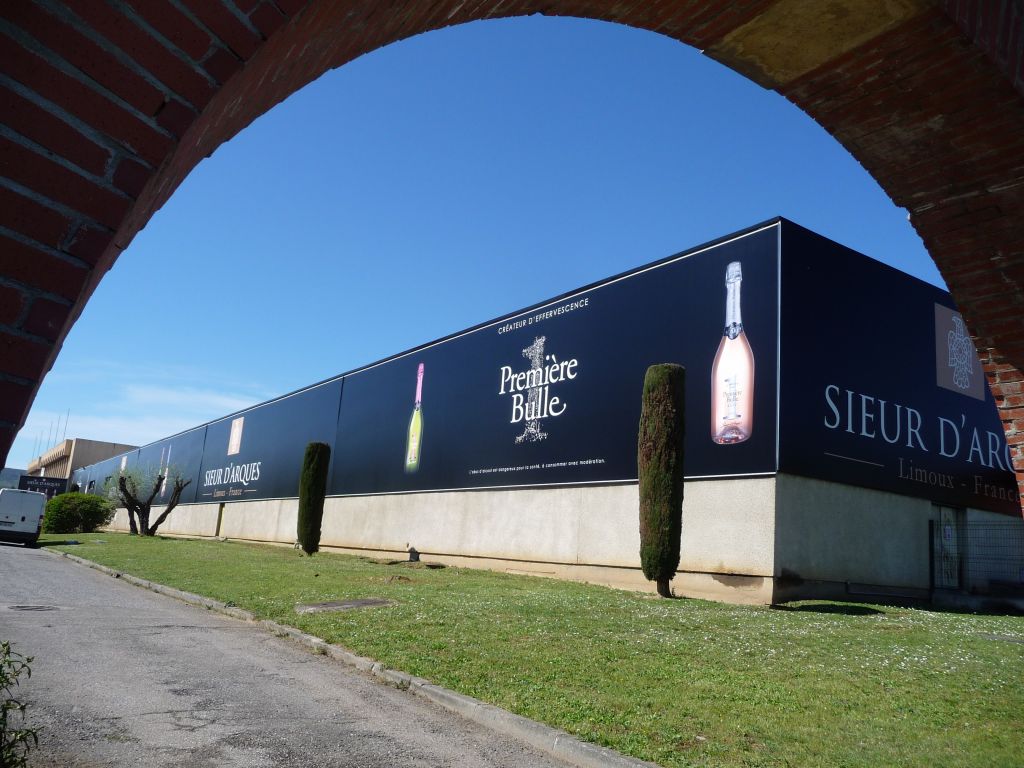
Isermatic designs tensioning systems for tensioned fabric freestanding frames, lightboxes, large-format communication and interior architecture.
Discover the Isermatic solutions or contact the team to check that your fabric, piping and profile are compatible.
Responsible, safe materials
Long service life
100% recyclable aluminium profiles
Practical commitments
to the environment
We care about making products that respect the environment and the people who use them every day. Our systems are designed to be recyclable and eco-friendly.