LED lightboxes: how they work, advantages, uses and models
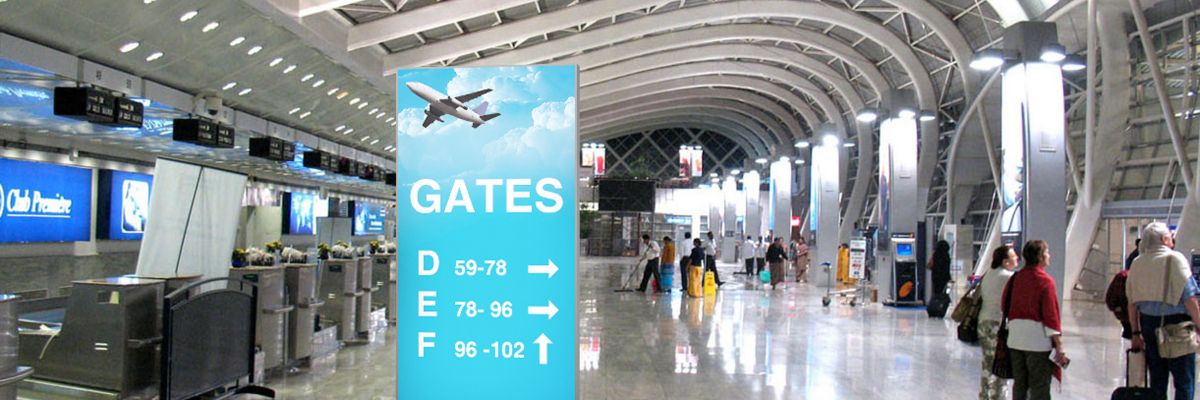
Visible day and night, customisable and suited to many configurations, the LED lightbox is a particularly effective way to make your communication more visible.
Signs, shops, shopping centres, trade shows, showrooms or signage: it shows off a visual with even lighting while keeping a durable, reusable structure.
But how does a lightbox work? What are its advantages? And above all, which solution should you choose for your project?
Isermatic Systèmes offers a range of profiles and tensioning systems for building lightboxes with push-fit or sewn piping, suited to the constraints of each installation.
What is an LED lightbox?
An LED lightbox is a structure with a built-in lighting system designed to backlight a textile visual
It is generally made up of:
- a structure of aluminium profiles;
- an LED lighting system;
- a printed or diffusing fabric;
- a system for tensioning and holding the fabric;
- a fixing system suited to how it is installed.
The light behind the fabric brings out the colours and details of the visual while giving an even finish.
Depending on the project’s needs, Isermatic offers two tensioning technologies: push-fit piping and sewn piping.
To better understand how tensioned fabric works, also discover our advertising fabric tensioning system.
Push-fit or sewn piping: which solutions for a lightbox?
The choice of tensioning system depends on the type of project, the textile used, the size of the lightbox, how it is mounted and the finish you want.
The push-fit piping system
The push-fit piping system holds and tensions the fabric directly in the profile.
This technology is used in several Isermatic solutions for single- and double-sided lightboxes, in different depths and configurations.
For projects using this technology, you can also read the installation guidelines for tensioned fabric with push-fit piping.
The sewn piping system
With sewn piping, the piping is attached around the edge of the textile, which is then inserted into the aluminium profile.
Isermatic’s Smart Vision range uses this technology to offer solutions for slim lightboxes as well as large-format, suspended, freestanding or double-sided displays.
This technology meets many indoor communication and display needs.
The two technologies therefore meet different constraints and uses.
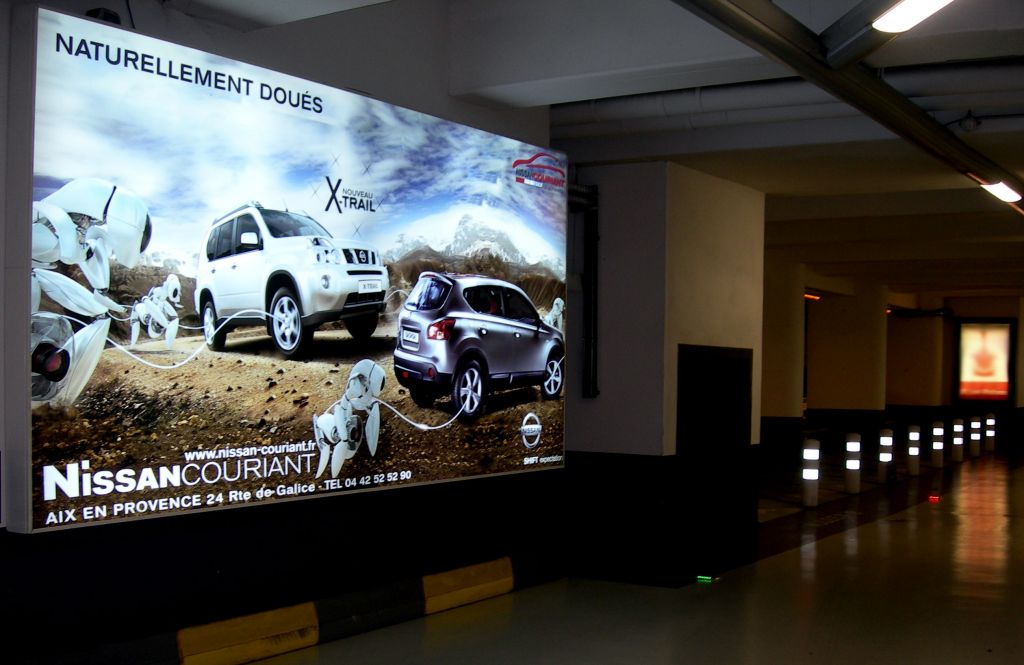
Why use a lightbox for your communication?
Communication that is visible day and night
The first advantage of a lightbox is its visibility.
Unlike a display that relies only on ambient light, backlighting keeps the message visible in dimly lit or very busy settings.
A lightbox can be used for:
- a shop sign;
- a shop window;
- a hall or reception area;
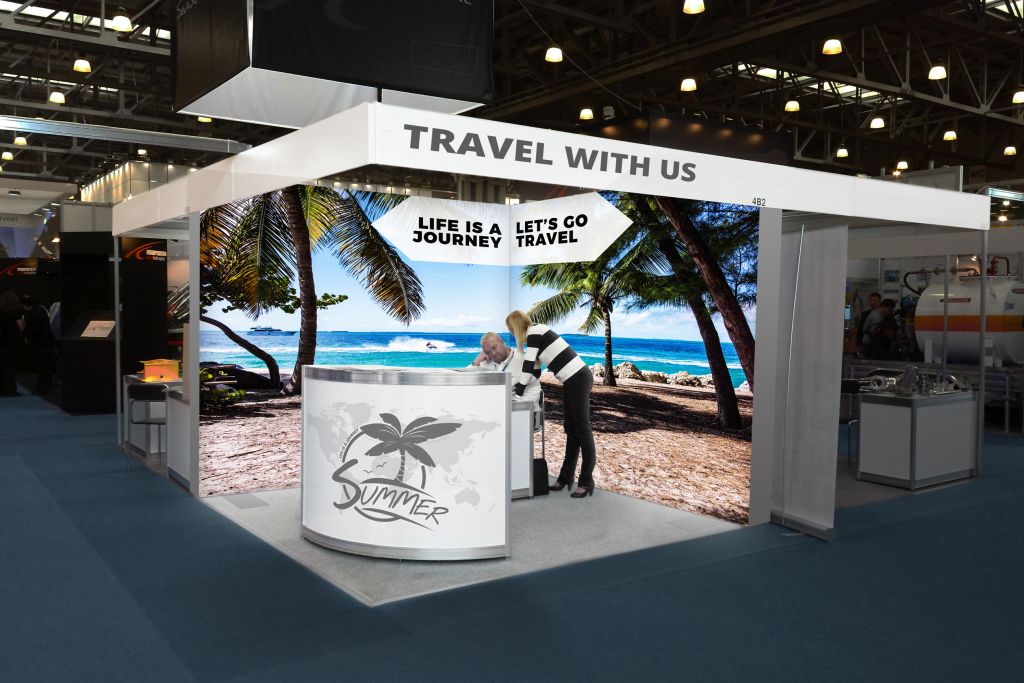
- a trade show stand;
- a showroom;
- a shopping centre;
- indoor signage;
- a large-format communication display.
To learn more about these benefits, read our article on the advantages of lightboxes.
Even LED lighting
The quality of a lightbox does not depend on its brightness alone.
The layout of the LEDs, the depth of the lightbox, its format and the choice of textile must all deliver even light diffusion, with no shadows and no differences in intensity.
Depending on the model, the lighting can be placed at the back of the lightbox or along the edges.
Low energy consumption
LEDs provide powerful lighting while keeping energy consumption down.
This technology has several advantages:
- controlled power consumption;
- long service life;
- little heat output;
- reduced maintenance;
- even lighting.
Easily refreshed communication
One of the main benefits of a tensioned fabric system is that you can keep the lightbox structure and replace only the visual.
A company can change a campaign, an offer, a visual identity or a message without replacing the whole display.
This modularity is particularly useful for shops, showrooms, trade shows and spaces where communication changes regularly.
Indoor or outdoor lightbox: what’s the difference?
The choice of lightbox depends largely on where it will be installed.
Indoor lightboxes
Indoors, a lightbox can be used in:
- a shop;
- a shopping centre;
- a showroom;
- a reception area;
- offices;
- a trade show;
- an event space.
In these settings, the slimness of the lightbox, how it is fixed and how it fits into the space can make all the difference.
Also discover Isermatic’s solutions for indoor communication and display.
Outdoor lightboxes
A lightbox can also be used for an outdoor sign or communication, provided the chosen solution suits the project’s constraints.
The sizing of the structure, the type of fixing, the textile, the lighting and the installation must then be studied according to the location.
For this type of project, discover Isermatic’s solutions for outdoor communication and display.
Which Isermatic lightbox should you choose?
Isermatic offers several ranges so you can match the lightbox to its setting, dimensions, installation method and preferred tensioning system.
Push-fit piping lightboxes
KPPS: a versatile solution
The KPPS is suited to custom lightboxes and illuminated signs.
With a 160 mm depth, its modular design makes transport and installation easier.
This solution suits many projects that need a single-sided lightbox.
KPPS SF: for a discreet finish
The KPPS SF also has a 160 mm depth.
Its clip system sits on the edge so it cannot be seen from the front, giving a particularly discreet finish.
The profile can also be used for projects that need specific shapes.
KPPS Slim: a shallow lightbox
With a depth of only 83 mm, the KPPS Slim is particularly useful when space is limited.
It can be used when the aim is to keep the display close to the wall.
Two structures can also be mounted back to back for some double-sided configurations.
KPPS DF: a double-sided solution
The KPPS DF is designed for double-sided lightboxes.
This configuration is ideal for displays that need to be seen from several directions, such as projecting signs or totems.
Smart Vision sewn piping lightboxes
The Smart Vision range complements the push-fit piping solutions with profiles designed for textiles fitted with sewn piping.
IC60: a slim wall-mounted lightbox
The Smart Vision IC60 is a profile for backlit single-sided lightboxes.
With a depth of 60 mm, it makes a slim lightbox with a discreet design. It is designed for wall mounting and can use edge or back LED lighting.
For wall mounting, the short side can reach 2 metres and the long side can be built by joining several modules.
This solution is particularly suited to shops, showrooms, reception areas and other spaces that need a shallow illuminated display.
IC100: for large-format lightboxes
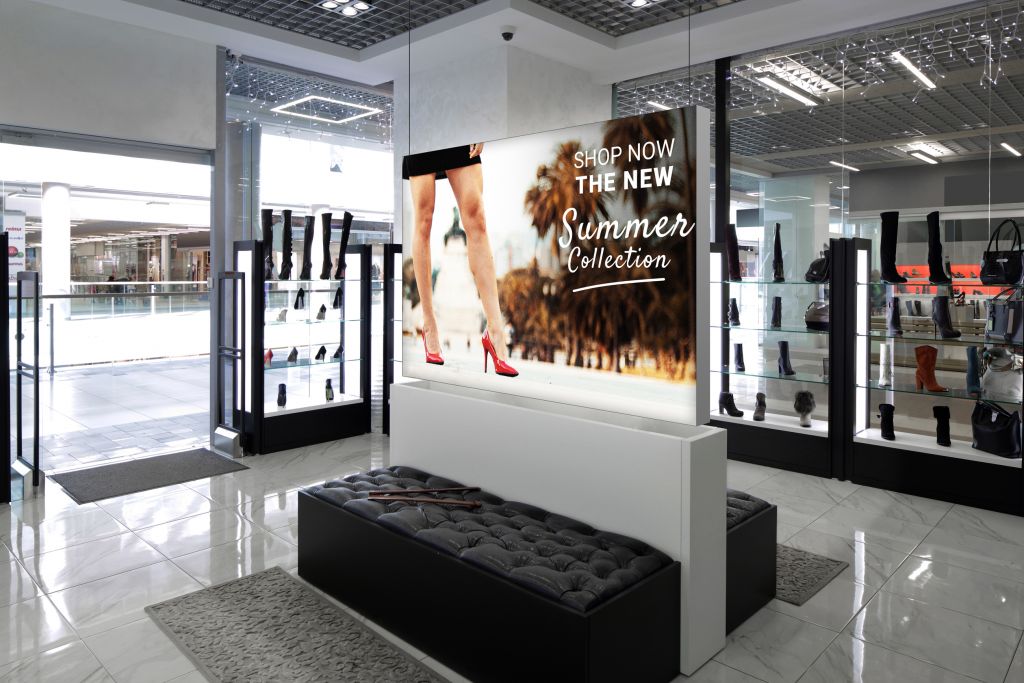
The Smart Vision IC100 is designed for single-sided lightboxes and large-format textiles.
Its 100 mm profile allows several installation options:
- wall mounting;
- suspended on cables;
- on stands.
The system uses edge LED lighting, with back lighting available on request, for even light diffusion.
For suspended structures, the maximum height is 3 metres, compared with 2.30 metres for a frame on stands.
This solution suits shops, showrooms and event spaces. For events, also discover the best display solutions for successful trade shows and stands.
ICD100: a double-sided lightbox
The Smart Vision ICD100 is designed for double-sided lightboxes for large-format textiles.
Its sturdy 100 mm profile uses edge LED lighting.
The lightbox can be:
- suspended on cables;
- installed on stands.
This makes it a particularly attractive solution for spaces where the visual needs to be seen from several directions.
The maximum height is 3 metres for a suspended frame and 2.30 metres on stands.
How do you choose the right lightbox?
Several criteria help determine the best solution for a project.
1. Installation method
Will the lightbox be mounted on a wall, suspended or placed on stands?
Some solutions are for wall mounting only, while others allow several configurations.
2. The visibility you want
A lightbox against a wall does not have the same needs as a display in the middle of a space.
When the message needs to be seen from several directions, a double-sided solution may be the better choice.
For a shop sign, the mounting method also depends on the location and the visibility you want. See our solutions for illuminated and non-illuminated signs.
3. Size of the display
The size of the visual directly affects the design of the lightbox, its tensioning system and its lighting.
For large textiles, specific profiles such as the Smart Vision IC100 and ICD100 can be considered.
4. Available depth
When space is limited, the depth of the profile becomes an important criterion.
A slim lightbox such as the Smart Vision IC60, with its 60 mm depth, or some of the compact push-fit piping solutions may then be preferred.
5. Tensioning system
The choice between push-fit and sewn piping depends on the textile, the type of lightbox and the project’s constraints.
It is best to decide on the tensioning technology at the same time as the profile and the type of lighting.
6. How often the visual changes
If the communication needs to change regularly, a tensioned fabric system lets you keep the lightbox structure and simply replace the textile.
This is particularly useful for seasonal campaigns, retail outlets and event spaces.
Lightbox or traditional display: which should you choose?
The two solutions meet different needs.
A traditional display may be enough for temporary communication or when backlighting brings no real benefit.
A lightbox becomes particularly worthwhile when the aim is to:
- make the message more visible;
- grab attention in a competitive setting;
- stay visible in a dimly lit space;
- bring out the colours and details of a visual;
- get a high-quality finish;
- have a reusable structure.
The choice therefore depends on the location, budget, how long it will be used and your communication goals.
To help you choose your display, also explore the options offered by indoor and outdoor advertising displays.
Why choose Isermatic for a lightbox project?
Isermatic offers a range of profiles and tensioning solutions for a wide variety of lightbox projects.
Depending on the project’s constraints, you can choose:
- a push-fit or sewn piping system;
- a single- or double-sided lightbox;
- a shallow depth or a structure suited to large formats;
- wall-mounted, suspended or on-stand installation;
- edge or back LED lighting, depending on the solution.
This variety means the display can be adapted to its setting rather than starting from a one-size-fits-all solution.
Isermatic’s teams can help professionals choose the profile, tensioning system and type of lighting best suited to their project.
Discover all Isermatic profiles and tensioning systems to find the solution that fits your constraints.
Frequently asked questions about LED lightboxes
How does an LED lightbox work?
A lightbox uses LEDs placed inside the structure to backlight a textile. Depending on the model, the lighting can be fitted at the back of the lightbox or along the edges to spread light across the whole visual.
What is the difference between sewn piping and push-fit piping?
With sewn piping, the piping is attached around the edge of the textile before it is inserted into the aluminium profile.
Push-fit piping uses a different system for holding and tensioning the fabric, directly linked to the profile.
Isermatic offers both technologies so you can pick the solution best suited to each project’s constraints.
Can the visual in a lightbox be replaced?
Yes. Using a tensioned fabric means you keep the lightbox structure and simply renew the textile when your communication changes.
This is particularly useful for retail outlets and events that regularly update their messages and visuals.
Are there double-sided lightboxes?
Yes. Several solutions can be used to build a double-sided lightbox when the visual needs to be seen from several directions.
Isermatic offers double-sided push-fit piping solutions as well as the Smart Vision ICD100 with sewn piping.
How do you choose the depth of a lightbox?
The depth depends on the format, the type of lighting, how you want it to blend in and the system used.
Isermatic has several profiles, ranging from the 60 mm Smart Vision IC60 to deeper structures suited to other configurations.